What Is a Smart Fuel Dispenser and How Does It Work?
Fuel dispensers have traditionally focused on one main job: measuring and delivering fuel safely and accurately.
Modern service stations, however, often expect more from the equipment installed on the forecourt. Payment methods are changing, customers are becoming more familiar with digital interfaces, and station operators increasingly want equipment that can support a wider range of functions.
This is where the smart fuel dispenser comes in.
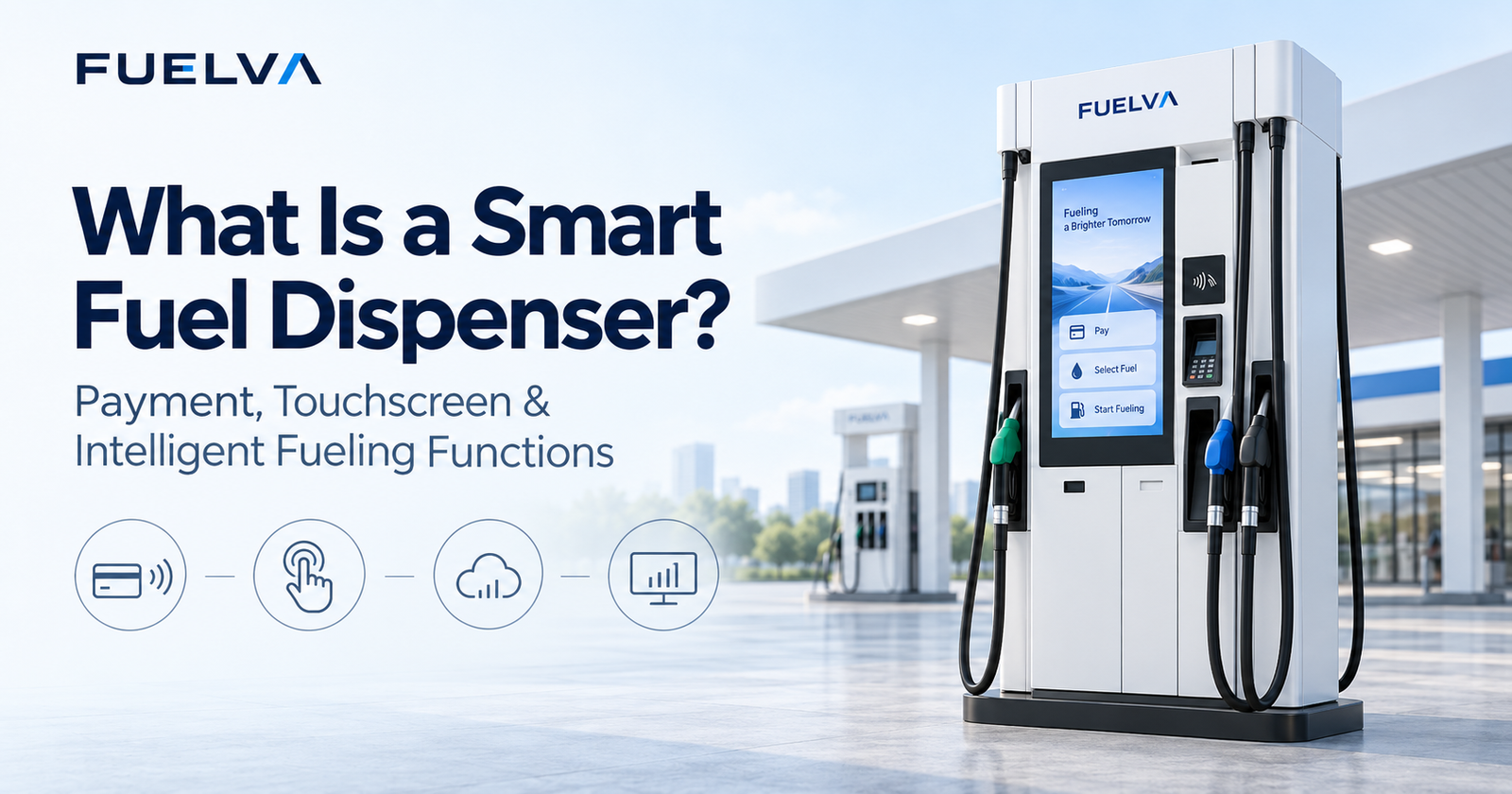
A smart fuel dispenser still performs the basic job of fuel delivery, but it can also integrate digital payment, touchscreen operation, advertising displays and other intelligent functions depending on the configuration.
The key point is that “smart” should not simply mean adding more electronics. The additional functions should make the station easier to operate or improve the fueling experience.
What Makes a Fuel Dispenser “Smart”?
There is no single function that automatically turns a conventional dispenser into a smart dispenser.
Instead, the term normally describes a dispenser that combines traditional fueling equipment with digital interaction or management functions.
Depending on the model and project requirements, these functions may include touchscreen operation, digital payment, advertising display, QR-code payment or other forms of customer interaction.
Some configurations may also support functions such as license-plate recognition or additional station management features.
The exact combination varies from one project to another.
For this reason, buyers should not choose a smart dispenser based only on the number of available features. The better question is which features are actually useful for the station.
How Does a Smart Fuel Dispenser Work?
The fueling process itself remains familiar.
The driver arrives at the fueling position, selects the required fuel and completes the fueling process through the dispenser.
The difference is that the user interface and transaction process may include additional digital functions.
For example, a touchscreen can guide the customer through the transaction. A digital payment function may allow payment through supported electronic methods. A display can also provide station information, operating instructions or advertising content.
Behind these customer-facing functions, the dispenser still needs reliable metering and stable operation.
Smart functions should therefore be treated as an additional layer around the core fueling system, not as a replacement for it.
Touchscreen Operation
A touchscreen is one of the most visible differences between a conventional dispenser and many smart models.
Instead of relying only on mechanical buttons or a basic display, the touchscreen can provide a more flexible interface.
It may be used to present transaction information, operating instructions, payment choices or customer-facing content.
For stations serving a wide range of customers, a clear interface can make the fueling process easier to understand.
However, screen size alone does not determine whether a dispenser is suitable.
The interface should be simple enough for customers and station staff to use without unnecessary steps.
Digital Payment Functions
Payment is one of the main reasons many station operators consider smart fuel dispensers.
Different markets use different payment methods, so the dispenser configuration needs to reflect local customer habits.
Some projects may only require conventional payment arrangements. Others may benefit from QR-code payment or other digital options.
Before specifying payment functions, buyers should confirm which methods are actually used in the destination market.
Installing a payment feature that customers rarely use adds complexity without improving the station.
It is therefore better to begin with the station’s payment environment and then select the appropriate dispenser configuration.
Advertising and Customer Information
A large display can serve more than one purpose.
When the dispenser is not being used for transaction information, the screen may also display station messages, promotions or advertising content.
For a busy retail station, this gives the operator another communication point directly at the fueling position.
The value of this function depends on how the station plans to use it.
A site that regularly runs promotions may see clear value in advertising display functions. A small fleet depot, on the other hand, may have little need for customer-facing advertising.
Again, the right feature depends on the application.
License-Plate Recognition and Other Intelligent Functions
Some smart dispenser configurations can include more advanced identification or interaction functions.
For example, certain systems may work with license-plate recognition or other intelligent management functions.
These options can be useful where the station wants to connect fueling activity with vehicle identification or a broader management process.
But advanced functions require more planning than simply installing a standard dispenser.
The buyer should confirm how the function will be used, how it fits the local operating environment and whether additional equipment or system integration is required.
This is one reason it is important to discuss the complete project rather than requesting a smart dispenser based only on appearance.
Smart Dispenser vs Conventional Dispenser
A conventional fuel dispenser can still be the right choice for many projects.
If the station mainly needs reliable fueling, straightforward operation and a simple payment process, adding a large number of digital functions may not provide much benefit.
A smart dispenser becomes more attractive when the station has a clear reason to use those functions.
For example, a modern retail station may want digital payment and customer interaction, while a flagship station may also use display and promotional functions.
The decision should therefore be based on operating needs rather than on whether one machine looks more advanced.
Which Stations Benefit Most From Smart Fuel Dispensers?
Smart dispensers tend to make the most sense when the station has regular customer traffic and wants to improve the transaction or interaction process.
They may be suitable for modern urban service stations, newly built stations, higher-end retail locations or projects where digital payment plays an important role.
They can also be useful when operators want a more flexible interface that can support different customer-facing functions.
For low-traffic locations with very simple fueling requirements, a conventional dispenser may still be more practical.
There is no advantage in paying for digital functions that the station will not use.
Think About the Customer Journey
One useful way to evaluate a smart dispenser is to follow the customer’s complete fueling journey.
Consider what happens from the moment the vehicle reaches the dispenser until the transaction is complete.
How does the customer select the required fuel?
How is payment made?
Does the customer need instructions from station staff?
Would a touchscreen reduce confusion?
Would digital payment make the transaction faster?
Would the station use the display for useful information or promotions?
These practical questions reveal much more than simply comparing feature lists.
Maintenance Still Matters
Smart equipment contains more electronic and digital components than a basic dispenser configuration, so maintenance should be considered from the beginning.
Buyers should ask about component accessibility, modular design, replacement parts and technical support.
The station should also consider who will handle basic troubleshooting if a display or digital function requires attention.
For overseas projects, clear communication with the supplier becomes particularly important.
A well-configured smart dispenser should not only look modern on the day it is installed. It should remain practical to operate and maintain over the long term.
Choose Functions Based on the Project
One common mistake is selecting every available smart function.
That can increase cost and make the project more complicated than necessary.
Instead, start with the actual requirements of the station.
A project may need digital payment but not advertising. Another may value touchscreen interaction and promotional display. A third may require more advanced vehicle identification.
There is no reason for every smart fuel dispenser to have exactly the same configuration.
A good configuration is one that solves the station’s real operating needs.
Smart Fuel Dispenser Options From FUELVA
FUELVA currently offers several smart fuel dispenser options for different station requirements.
The Lizhi Smart Fuel Dispenser is designed around touchscreen operation, digital payment, advertising display and flexible smart configuration.
The Libo Smart Fuel Dispenser focuses on digital interaction features such as advertising, QR-code payment and intelligent customer-facing functions.
The Lisheng Pro Smart Fuel Dispenser is positioned for modern or flagship service stations requiring multiple payment options, advertising display and interactive functions.
These products serve the same broad smart-dispenser category, but their configurations are not identical.
That is why buyers should first define the functions they actually need before selecting a model.
Information to Prepare Before Requesting a Smart Dispenser Quotation
When requesting a quotation, provide the supplier with the basic project information first.
Useful information includes station type, required nozzle quantity, expected payment functions, touchscreen or display requirements, management functions, order quantity and destination country.
If the project requires a special smart function, describe how you expect it to work.
The more clearly the application is explained, the easier it is to recommend a practical configuration.
Is a Smart Fuel Dispenser Right for Your Station?
A smart fuel dispenser can improve the way customers interact with a fueling station, but only when its functions match the actual operating environment.
The best choice is not the dispenser with the longest feature list.
It is the dispenser that combines reliable fueling with the digital functions the station genuinely needs.
For some projects, that may mean a touchscreen and digital payment. For others, advertising display or additional intelligent functions may be important.
Start with the station workflow, customer payment habits and future plans. Then choose the smart functions around those requirements.
Need Help Selecting a Smart Fuel Dispenser?
FUELVA provides smart fuel dispenser configurations for different retail and commercial fueling applications.
Send us your station type, nozzle requirements, preferred payment functions, smart features, order quantity and destination country. We can review the project information and help you select a suitable configuration.