How to Choose a Fuel Dispenser for a Gas Station
Choosing a fuel dispenser for a gas station is not simply a matter of selecting a machine with the right appearance or the lowest price.
Two stations may sell the same fuel but need very different dispenser configurations. A small local station may value simple operation and easy maintenance, while a busy urban station may need more fueling positions, digital payment functions and better traffic handling.
Before asking a supplier for a quotation, it is worth spending a little time defining how the dispenser will actually be used.
Start With the Type of Gas Station
The first question is not “Which model should I buy?”
It is:
What kind of station will this dispenser serve?
A conventional gas station with moderate traffic usually has different priorities from a fleet depot, logistics yard or industrial fueling site.
For a standard retail station, buyers often focus on practical operation, reliable metering and a configuration that is easy for staff to manage.
A high-traffic station may need several fueling positions so that more vehicles can be served at the same time.
Fleet and industrial users may care more about controlled fueling, on-site management and equipment that fits the layout of the project.
Defining the application first makes the rest of the selection process much easier.
Decide How Many Nozzles You Really Need
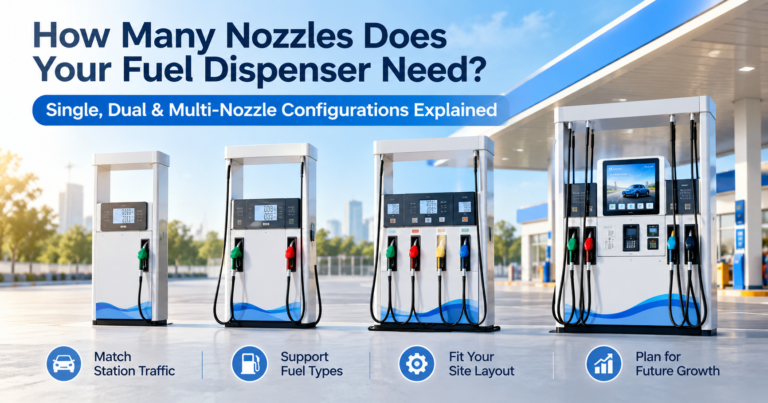
Nozzle quantity has a direct effect on the way a station operates.
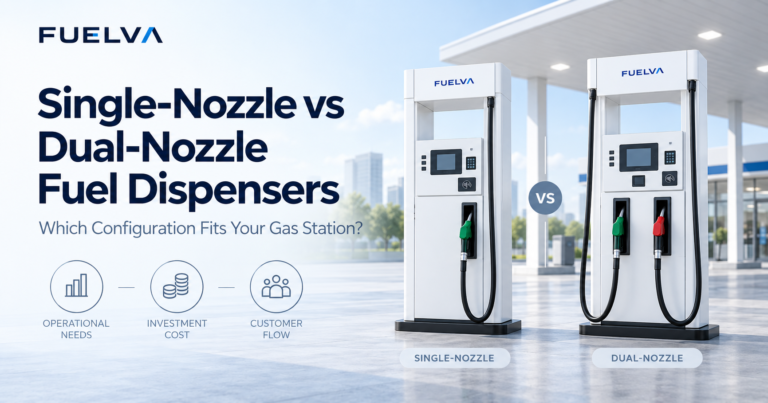
A single-nozzle dispenser can be suitable for locations with relatively simple fueling requirements. Dual-nozzle units offer more flexibility and can support stations that need two fueling positions or different configurations.
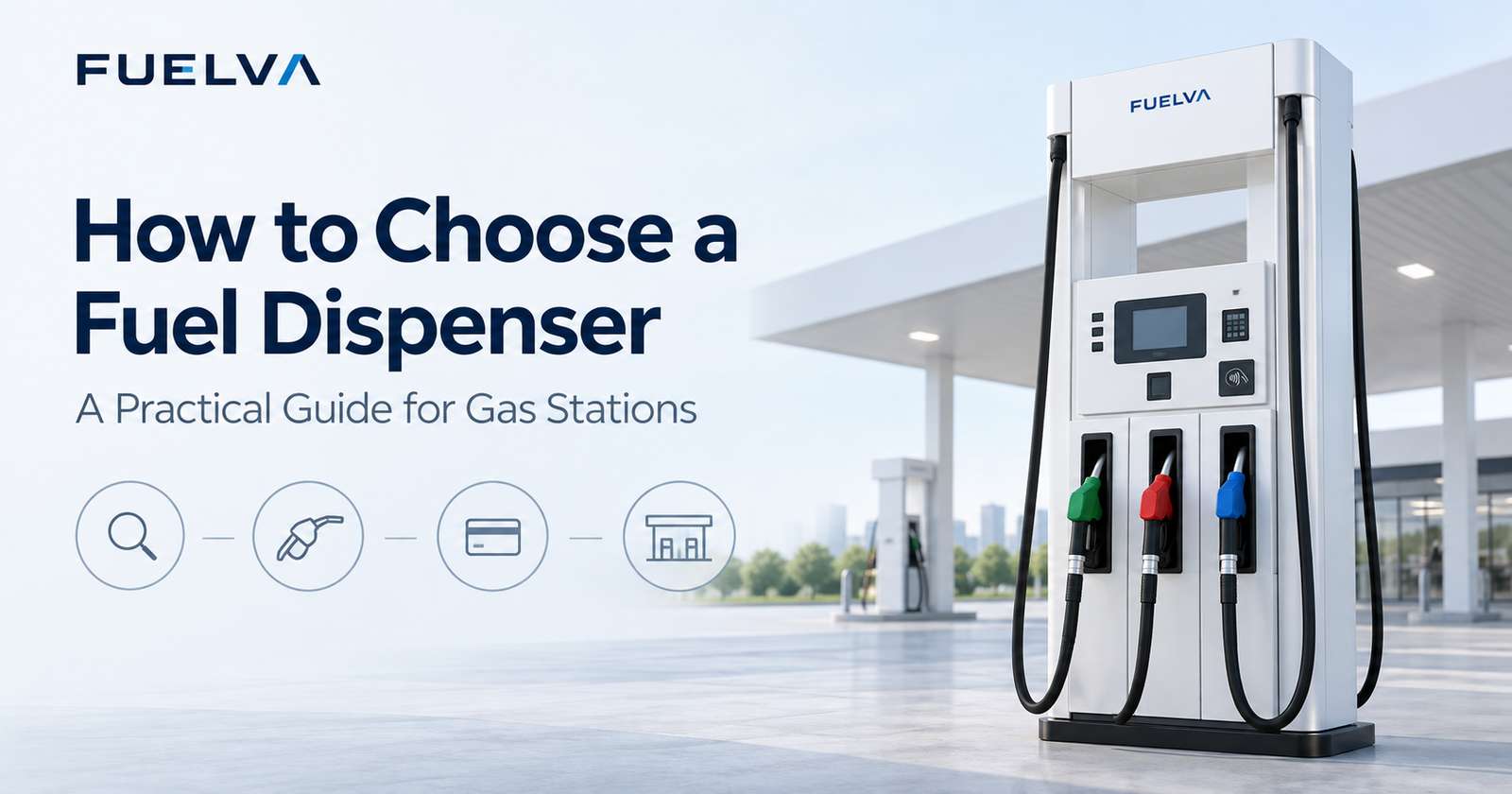
For stations with heavier traffic, multi-nozzle fuel dispensers can reduce waiting time and allow several fueling operations to take place more efficiently.
However, more nozzles are not automatically better.
A larger dispenser normally means a more complex configuration, so buyers should consider actual vehicle traffic rather than choosing the largest model available.
A useful question is:
How many vehicles are likely to need fueling at the same time during the busiest period of the day?
That answer is usually more useful than simply asking for the maximum number of nozzles.
Think About Fueling Volume and Station Traffic
Daily traffic should also influence dispenser selection.
A station serving a limited number of vehicles has different operational demands from a site that handles continuous commercial traffic.
Instead of looking only at the machine itself, consider the complete fueling process:
- How many vehicles enter the station during peak hours?
- How long can a vehicle reasonably occupy a fueling position?
- Will the station operate throughout the day?
- Is the dispenser intended for retail customers or controlled fleet use?
- Could traffic increase in the future?
These questions help determine whether a standard dispenser is enough or whether a multi-nozzle or higher-capacity station layout would be more practical.
Choose the Right Payment and Management Functions
Payment requirements vary considerably between markets.
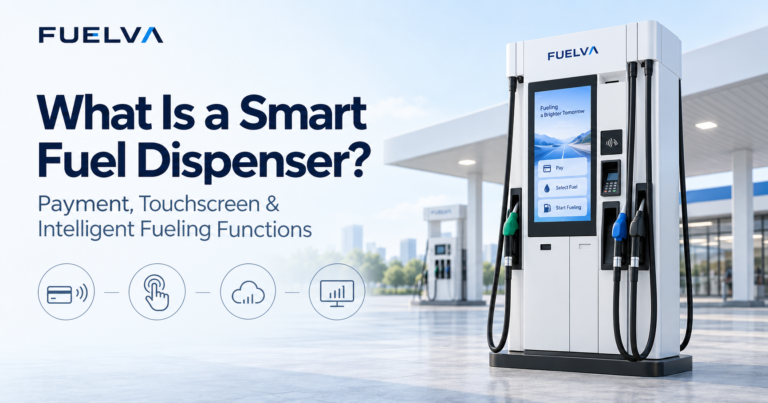
Some stations only need a straightforward fueling and settlement process. Others may require digital payment, touchscreen operation, customer interaction or station management functions.
Before selecting a smart fuel dispenser, buyers should confirm which functions are actually useful in their market.
Adding features that customers never use only makes the equipment and operation more complicated.
For modern service stations, smart functions can be valuable when they support the way customers already pay and interact with the station.
The important point is to choose functions based on the project, rather than selecting features simply because they are available.
Consider Maintenance Before Buying
Maintenance is often overlooked during the purchasing stage.
A dispenser may look attractive in a catalogue, but daily maintenance matters much more after installation.
Buyers should ask the supplier about the internal arrangement of major components, access for routine maintenance and the availability of replacement parts.
A practical modular design can make inspection and servicing easier.
It is also useful to understand which components require regular attention and what information the supplier can provide after delivery.
For an overseas buyer, this becomes especially important because spare parts and technical communication may need to be handled remotely.
Check the Installation Environment
The location of the equipment should be discussed before the final configuration is confirmed.
For example, a conventional service station, a logistics depot and an industrial site may have very different installation conditions.
The supplier may need information about:
- available installation space;
- station layout;
- intended fuel type;
- number of fueling positions;
- local operating conditions;
- electrical requirements;
- payment requirements;
- project destination.
Providing this information early reduces the chance of selecting a dispenser that does not fit the actual site.
Do Not Buy Only on Price
Price is naturally important, especially when several dispensers are required for one project.
But comparing quotations only by the final number can be misleading.
Two machines that appear similar may use different configurations or include different functions.
Before comparing prices, make sure each supplier is quoting for the same basic requirement.
Check the nozzle configuration, operating functions, payment options, supplied accessories and other project requirements.
A cheaper quotation is not necessarily a better choice if important functions have been removed.
At the same time, paying for unnecessary features also increases project cost.
The goal should be a configuration that matches the station rather than simply the lowest or highest-priced option.
Leave Room for Future Expansion
Gas stations often change after they begin operation.
Vehicle traffic can increase, payment habits can change and station owners may later want additional fueling positions or management functions.
For this reason, it is worth discussing future expansion with the supplier before placing an order.
A station that currently needs a simple configuration may benefit from equipment that allows reasonable flexibility later.
This does not mean buying every available feature in advance. It simply means avoiding a configuration that becomes restrictive as soon as the business grows.
Information to Prepare Before Requesting a Quotation
A supplier can usually provide a more useful recommendation when the buyer gives clear project information.
Before requesting a quotation, prepare the following:
- gas station, fleet or industrial application;
- required dispenser type;
- preferred nozzle quantity;
- fuel type;
- payment or management requirements;
- estimated order quantity;
- destination country;
- any special project requirements.
Even basic information can reduce repeated communication and help the supplier understand the project more quickly.
Choosing the Right Fuel Dispenser
There is no single fuel dispenser configuration that is suitable for every gas station.
A practical choice comes from matching the equipment to the real operating conditions of the site.
For a smaller conventional station, a simple and cost-effective dispenser may be enough. A modern retail station may benefit from smart payment and customer-facing functions. High-traffic locations may require multi-nozzle equipment, while fleet and industrial projects may need a different type of fueling solution altogether.
The best starting point is to define what the station needs today and what may change in the future.
Need Help Selecting a Fuel Dispenser?
FUELVA provides standard, smart, multi-nozzle and industrial fueling solutions for different station and project requirements.
Send us your station type, nozzle requirements, payment needs, order quantity and destination country. We can review the information and help you identify a suitable configuration for your project.